• Coming Soon
  • Portfolio
  • About
  • Store
  • Blog

SUSAN LASH PHOTOGRAPHY

  • Coming Soon
  • Portfolio
  • About
  • Store
  • Blog

The Way Appears

We never know where one decision will take us. And that one decision rarely impacts us in just one way.

One of those decisions I made has impacted me in countless ways, and the ripple effects continue to this day.

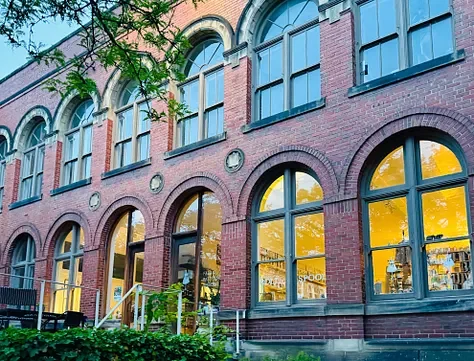
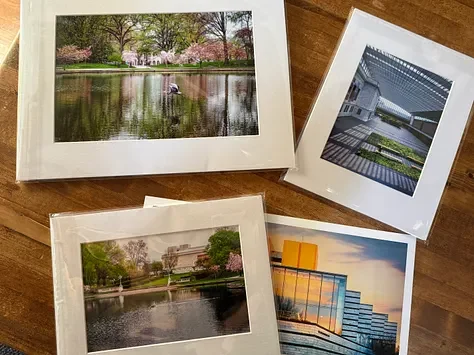
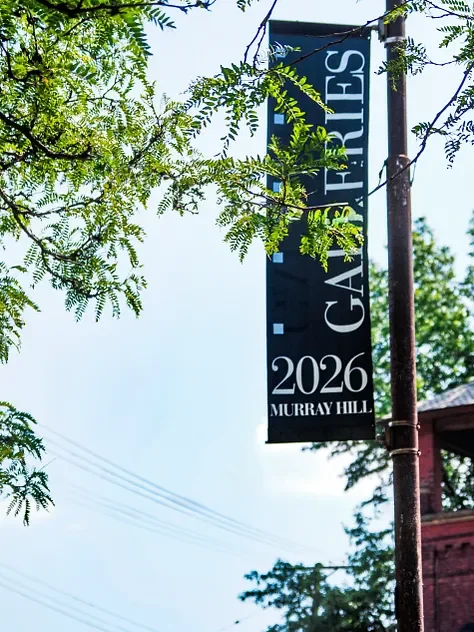
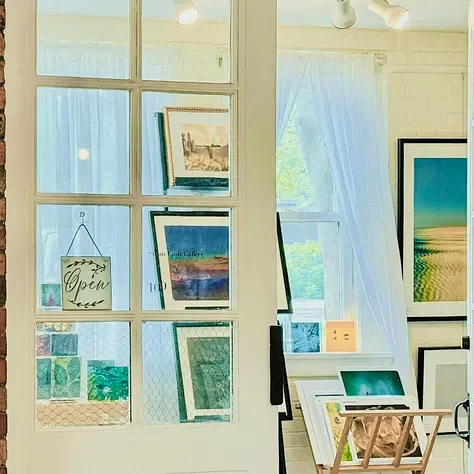
I had only a vague sense of how opening a studio in Murray Hill Galleries to sell my photography would impact my life.

It began with a single decision from an unexpected place: being in the building for an appointment that had nothing to do with art or photography. Yet that is all that was on my mind when I left, after wandering around and looking in various galleries, thinking, I would love to have a space here. And then, just a few days later, trying to squeeze through the doorway of what I was told could be a small studio/gallery. I was eventually satisfied with just getting my head in to take a quick glance at the jam-packed storage room while trying to envision how to show and, hopefully, sell my photography there. The building manager turned to look at me, surprised to hear me say, I think it could work — so surprised he couldn’t help but respond, Really? Are you sure?

My mind was barely involved in the decision to start a business and sign a one-year lease. I made the decision based on intuition and a strong desire to try.

Since opening 18 months ago, it’s been a series of decisions, one after another, all from a place of the unknown. Flying blind most of the time, but having faith in my photography and trusting that it would resonate with others. The old build it, and they will come thing. Or the quote I think of most often from Rumi: As you start to walk on the way, the way appears. It has, and the people who come in help me to take the next step as I continue to find my way as a business owner and artist.

And speaking of people, so many came in over the weekend at the neighborhood summer Art Walk! They came in—they looked, questioned, and listened to the stories behind the photographs, they left with them, or ordered others. Some stayed to chat, and others returned because something I created (!) spoke to them so strongly they couldn’t ignore it.

And the conversations! People showed me their own photography, asking what I thought, and I told them what I liked, what I thought they did well, and what they could try next. When one person showed me about ten photos and then asked, Do you think I’m ready for a camera? My reply was yes! Then the conversation moved on to cameras and the wisdom of buying used.

One of my favorite conversations was with a woman who had photographed big-name rock bands in the 1970s. She wants (needs) to do something with those hundreds of photographs, so I encouraged her to get a table at the next Art Walk, and she’s going to. Think of the stories in those photos! And who knows? Maybe saying yes to a table at the next Art Walk will become one of those decisions whose impact can’t be seen yet. I certainly didn’t see where my own first visit to this building would lead.

What about you? What decision could you be avoiding or be unsure about that could be a doorway?

We are all hungry for connection and to see the good and the beauty in the world. That’s what was alive in my small corner of a building full of art makers and enthusiasts. It was like I was plugged into a battery pack all weekend. The energy was palpable in that space, especially on Sunday.

My heart is full. The energy of the weekend still fuels me. All of it reminds me that creative pursuits connect us, that art unites us, and that it is an essential counterweight to the world we now find ourselves in.
7785dece-1e29-4999-969d-70c32fe5df70_3802x5069.webp
76246941-ed92-4c51-9585-3775cd0ddb91_1402x1402.webp
6aedbebc-3509-4999-a81c-7673c8e6b7f5_1980x1508.webp
76222eaf-0188-4639-aaa0-429a77410ea5_5711x4283.webp
b41fb753-cb9b-4b5a-b75a-1db0a7400c11_3024x4032.webp
fee902ab-3587-4808-b1c0-9a5802356881_4954x3709.webp


categories: photo essay
Thursday 06.11.26
Posted by Susan Lash
 

Natural Connections

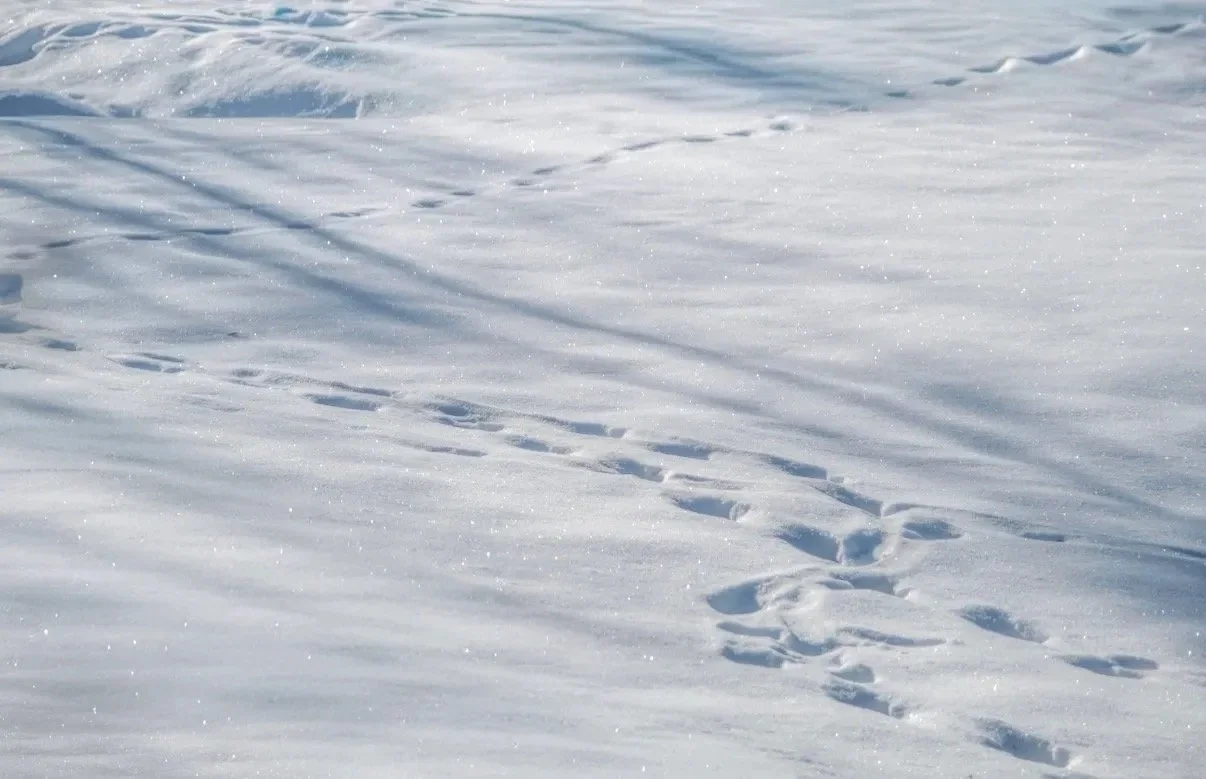
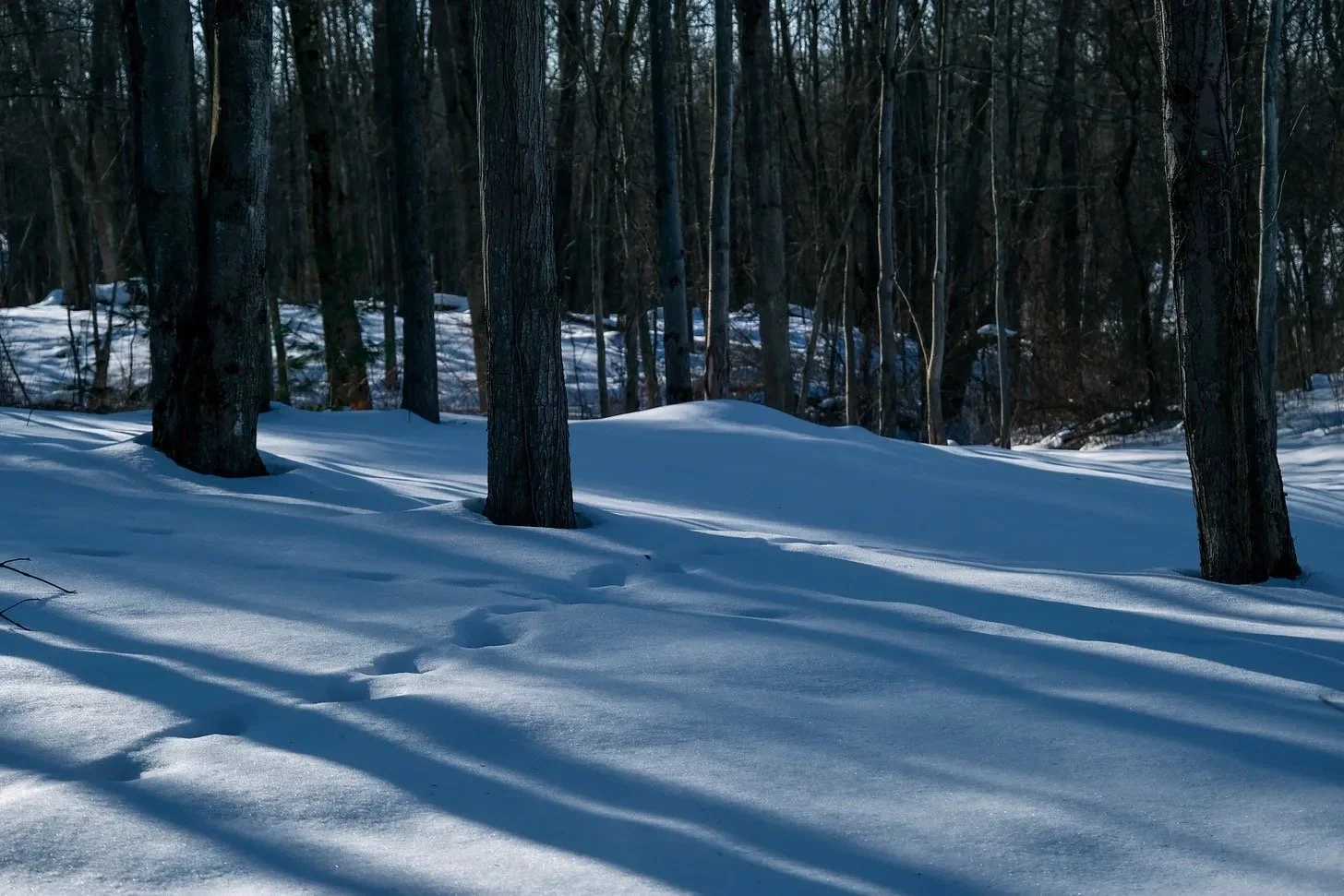
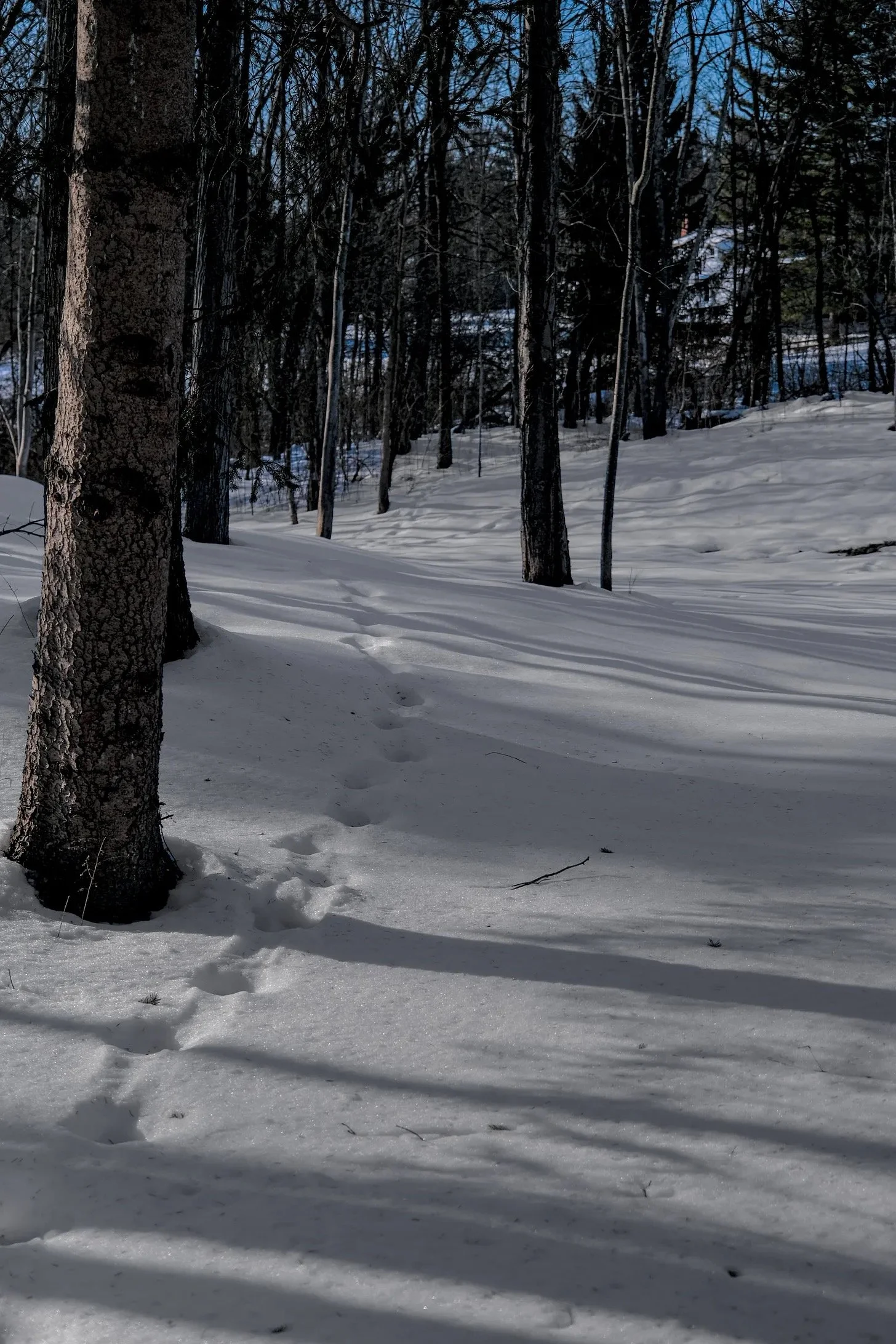
There’s something fascinating about animal tracks in fresh snow, especially when they meander before settling into a direction, like they did here. It’s as if the deer paused mid-journey, reconsidered, and then thought “nah” and chose again.

I stood there for a while, totally mesmerized by the patterns. At my neighbor’s, the paths they took were ruler-straight, but in my backyard the animals seem to do things more like moi: a few tentative steps, a few loops as though something(s) caught their attention—or maybe doubt took hold—then a steady line forward, seemingly confident for a stretch, until suddenly without warning a sharp right turn and on they went. Do you think the deer explained its sudden change in direction to the others nearby? Nope. It simply kept moving.

We like to imagine that our lives are more linear—that we’re more decisive, more certain, but most of us move through the world in exactly this way—pausing, circling, second-guessing, choosing again, stopping, and then changing direction entirely, especially when we follow our hearts rather than the expectations or paths of others.

What the snow makes visible is what usually stays hidden: the hesitation, the reconsideration, the moments when our intuition overrules the plan we had.

Safe to say, the deer wasn’t troubled by its changes of direction; it just adjusts and keeps going, which might be the best reminder for us that these tracks offer: forward motion doesn’t require clarity or certainty, only the willingness to keep moving, even when the path takes us somewhere we didn’t expect. That’s usually the best part of the journey.


Sunday 02.15.26
Posted by Susan Lash
 

Photography as Medium

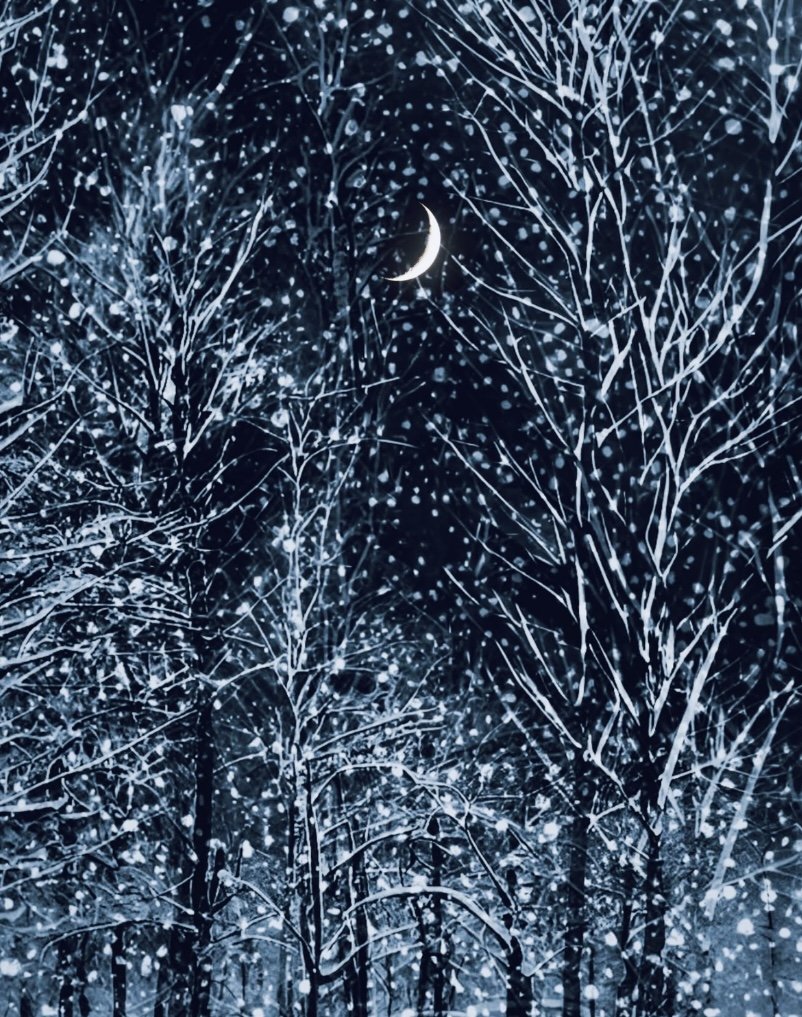
Midnight Moon is a new image that proved to be a favorite among visitors during the Little Italy Art Walk. What surprised me most was how many people wanted to stop and talk about Midnight Moon, about the Cold Supermoon visible during the art walk (it turns out there are many moon worshipers). I loved hearing how they described it and how it made them feel.

Midnight Moon began as a simple photograph I took last winter, on a day of heavy snowfall when the air felt electric from the cold. The finished image has traveled far from that original photo. I worked on it off and on during the year, coaxing it into the visual story I wanted to tell.

I often find myself in conversations about photography—sometimes about my work specifically, and sometimes about photography in general. Some people want to know about technique and how I “took the picture.” Others comment on the atmospheric quality of an image like this one, and want to understand how it was made.

The more these conversations happen, the more I see myself as an artist, something I struggle to believe. I’ve identified as a photographer—and my work as photography—for years, because that’s where I started and because my tools haven’t changed. I still use a camera, still bring my files into Lightroom, and still fall into the familiar rhythm of editing. Yet the word photographer carries certain expectations for many non-photographers, and increasingly, that’s not the kind of photography I’m interested in practicing.

Nearly everyone takes pictures now, and many assume that creating an image like the ones in the gallery (or the work they see online) is simply a matter of pressing the shutter. I’ve encountered thinly veiled hostility when I explain that yes, the image is a photograph—one I took—and then worked with creatively until it reflected the experience or story I wanted to tell.

Not everyone can draw or paint, and people don’t (usually) ask painters to explain how they made something or what materials they used. But because nearly everyone takes photos with their phones, there’s often a disconnect in understanding the difference between casual picture-taking and the work of a photographer or visual artist.

I have a simple way of thinking about that distinction. I cook. I use many of the same ingredients and tools as a chef, but I am not a chef—not even close.

I follow the work of many extraordinary photographers, and I understand that my work is not on the same level as theirs. Still, I don’t assume they’ve “cheated” or created their images with AI.

Most people think images begin and end with the camera, so they ask what camera was used to take it. I point out that some of the images hanging were taken with a camera with fewer megapixels than their iPhone, and most phones have more than adequate cameras to make and print photos.

While the camera provides the raw material (and many creative techniques are done in camera) of the substance of a moment or place, the finished piece comes from somewhere else entirely. Editing has become less about correction and more about shaping, refining, and interpreting. The image becomes a place where memory, intuition, and feeling carry more weight than the technical aspects of photography.

They may not be asking whether a scene is “real”; maybe they are responding to something broader and personal to them.

The more in-depth these conversations become, the more limiting (and false) the word photographer feels. While it’s accurate to a degree, it doesn’t fully describe the arc of the work or what drives my process. Photography is my language, but it isn’t the whole story. It could be that what I’m doing fits more comfortably within the wider space of visual art, where a photograph is allowed to evolve beyond the initial frame, where interpretation is central, and where the final work is shaped very little by documentation alone.

By the end of the art walk, after hearing people describe what Midnight Moon and other similar photos said to them, I realized I had already crossed that line without noticing. My work has been changing for some time, quietly and organically, and those conversations simply brought it into sharper focus.

I haven’t left photography behind at all. I’m only wanting to expand beyond the narrow idea of what a photograph “should” be. Maybe I’m more of a visual artist who happens to use a camera, and Midnight Moon feels like a clear expression of that—a marker of where my work has been heading all along, and where I want it to continue to go.


Tuesday 12.23.25
Posted by Susan Lash
 

Moonscapes


Photographing the moon has become a kind of ritual for me. I have always loved the night sky, I find it both grounding and full of mystery; photographing it encourages me to get creative as I attempt to portray its essence in a photo.

My process starts with looking up, something I am prone to do anyway when I have a camera in my hand. Sometimes I sort of plan these moon captures, checking for moonrise times, moon phase, and the weather.

Other times, I stumble across it all unexpectedly, a sliver of light hanging above the trees—like last night when I stepped outside before bed to watch fireflies (what I grew up calling lightening bugs), or in winter, when the full moon is so bright and the sky so clear that it casts luminescent shadows across the fallen snow and my bedroom wall. I’ve gotten out of bed more than once to go outside in the cold and look.

In every instance, I’m grabbing my camera.

Throughout the year, and many years at that, I’ve photographed the moon in its different phases and in every season. In winter, the light is cool and milky, but the moon seems sharper, suspended in a pitch black, stark sky glowing with millions of tiny twinkling stars. Spring brings a little softer light, often framed by budding trees or drifting clouds. Summer moons, full and warm, rise later and set as the sun rises, making for some beautiful skies.

One of my favorite moon photos, Strawberry Moon, surrounded by pink tinged clouds, was taken near dawn in June 2020.

In autumn, I’m obsessed with capturing the big full harvest moons, orange and low on the horizon.

These moon photographs are less about technical perfection and more about capturing a sense of the experience, and the moon’s mystery—usually with a dose or two of artistry.

I love the calm that settles in when you stand beneath the moon and stars, a reverence for all of life. Night skies have a certain magic to them, and that’s what I’m always seeking to reflect and create.

As the night sky shimmers above, I’m not just seeing—I’m taking in the stillness, the contrast of light and shadow, and the vastness and awesomeness of the heavens above. The experience of it all is what I love.

I hope these photographs reflect the moon’s magnificence and wonder.

Tuesday 11.18.25
Posted by Susan Lash
 

What the Camera Can't See

I’ve come to understand something important about the way I photograph.

It doesn’t really begin with what I see. It begins with what I feel.

This realization didn’t happen all at once. It came gradually, like fog lifting, slow but sure.

IMG_2187.jpeg
IMG_3246.jpeg
IMG_7700.jpeg

It may seem like I am simply chasing light and seeking to capture beauty. Like how when the early morning light sifts through trees, or how the glow of dawn softens the sharp edges of life, or how on sunny mornings as I’m coming from the bedroom I still can’t believe how the blinding the light in the hallway is or the sharpness of the shadows. Nearly nine years of seeing this not daily, but often, and I am still stunned. I can’t explain why I have not ceased to be amazed by any of these scenes or why I routinely take photographs of the same views over and over attempting to replicate the boldness of the light and shadow—and usually failing. Those things still draw me in, but more often it’s not the scene itself that moves me, it’s what the scene stirs in me.

When I go out with my camera, I don’t always know what I’m looking for. I walk, I pause, I notice. Sometimes it’s the wind blowing through tall grass that catches my attention. Other times it’s the quiet that settles in with twilight’s arrival, or the way shadows stretch as the sun gets lower in the sky. I’ll raise the camera, click the shutter, but I’ve learned that the photograph I take in that moment is just part of the story and only the beginning of the finished photograph.

It’s in the editing of the photo that the real photo-making and creativity happens.

Editing is where I develop what the scene says to me. Where I shape not just what I saw, but what I felt standing there. I might soften the focus, reduce the highlights or shadows—or increase them, change the saturation or tonal quality—or all of the above.

All in an attempt to capture the experience and mood of the scene.

All done to help translate emotion into image. The photograph becomes a reflection and accounting, not just of the subject, but of my inner landscape.

Enlight31.jpeg
AfterlightImage.jpeg
IMG_6573.jpeg

This is especially true when I photograph the night sky. Standing under the moon, surrounded by stars, I feel something too vast for words—something timeless, something magical. The camera can’t always capture that. The moon often flattens into a bright circle and the stars lose their shimmer. But later when editing, I begin to build the image that mirrors my experience more fully.

Sometimes that means long exposures—or bringing together multiple exposures or focus stacking—to echo what my eyes saw across the sky, how my attention moved from the moon to the silhouette of trees, or to the soft texture of clouds drifting by.

Other times, it’s about creating depth and mystery through shadow, pulling out subtle shadows that weren’t visible at first glance. The goal isn’t to recreate the sky exactly as it was. It’s to hold the feeling of witnessing: the stillness, the wonder, the sense of standing in the presence of something far greater than us.

In those moments, the editing process feels less like manipulation and more like memory-work and storytelling. I’m not trying to perfect the image, I’m trying to be honest with the representation.

To honor what the sky gave me. What I felt in my soul when I looked up and let the night seep in.

And so photography for me, is not just about capturing what the camera sees. It’s about translating the emotional experience into something visual—something that can be felt again.

My images are not records. They are stills of remembrance. They are what happens when memory, feeling, and light meet in the space of the frame.

In the end, the photograph is a vessel.

Not for what was merely there—

but for what moved through me

when I stood still,

looked up,

and felt something sacred in the dark.

.

Sunday 06.22.25
Posted by Susan Lash
 

Seeing Beyond the Literal

Untamed.

At its heart, Intentional Camera Movement is a way of going beyond the surface of the visual world into something more poetic. For photographers used to chasing sharpness and accuracy, it can feel radical or even wrong, but sometimes, in letting go of control, we find the truest way to say, “this is what it was like to be there”.

Read more

tags: photo essay
categories: photo essay
Tuesday 06.03.25
Posted by Susan Lash
 

The Soul Behind the Lens

Photography is more than capturing a moment or experience. The practice of photography rises from a deep love of the natural world and a personal vision of artistic expression. It begins before I ever lift the camera to my eye. A feeling or something that inspires and pushes me to look at something again or from a different perspective and to create. The process of creating and the following result isn’t only external — it is also experienced within and is an indelible part of my photography.

When I look through the viewfinder of a camera, it feels as if the world opens up in ways I can’t fully explain. Details that I may never have noticed before — leaves backlit by the sun, the way shadows fall, or how the tonal quality of light changes with the seasons — take on such significance. In these moments, I’m not only seeing but also feeling. The camera and lens become an extension of that, translating what is stirred in me into visual language. Each photo I create is infused with emotions and perspective.

It is not just about what is in front of me. It’s about what is evoked within me and, in turn, what it may evoke in the viewer. There’s a vulnerability and intimacy to this process. Each photo tells a story and reveals something about me — what I value and want to celebrate or what I want to create. Many times, the photos I make feel like an extension of my experience. Where to focus, what to include — what to leave out, and how to highlight and compose, all say something about me as well as the subject. The creative decisions I make during that process often mirror my inner world or are certainly born there. After the accident, so much of my work was dark, shadowy, in shades of deep blue or gray. That work was an extension of my inner world. It almost always is. I think this is true for most creatives.

In these moments, I’m reminded of what I value as an artist and as a human: beauty, nature, birds and animals, light and shadow, trees and the sky — this big beautiful planet. I love that photography encourages me to slow down, take notice and appreciate the beauty of the natural world. Creating a photo that feels like an extension of my experience is deeply fulfilling. It doesn’t just document the subject. It also reveals something about me, my feelings and thoughts, my story.

I can connect with the world and myself in ways I cannot otherwise. The rewards of creative expression are profound yet simple. The satisfaction I experience when creating a good photo is from within. It’s nice when others enjoy my work, it can be validating too, but the lasting impression is what I feel within — a subtle sense of pride or accomplishment about creating something that adds beauty to the world or inspires someone. It feels honest and authentic, and essential, especially in dark times. In periods like ours presently, it is the creatives — the poets, artists, and writers, who bring beauty and solace to the world. Creative works can inspire us all to do better, be better, and to lead with our hearts.


Wednesday 01.22.25
Posted by Susan Lash
 

Winter's Artistry

Winter is a minimalist artist. Painting the landscape with a brush dipped in shades of gray. Her palette is subtle but evocative, a masterclass in restraint and understatement. Where summer flaunts her vivid colors, winter whispers in shades of white, gray, and blue.

The first stroke of winter is the gray of December, decorating fields and forests in luminous monochrome. Winter’s snow and ice transform the mundane into the magical. The light shifts throughout the day, casting pale pink highlights at dawn and muted shades of lavender at dusk.

Grays dominate the skies, layering depth and texture in endless variations and shades. Charcoal clouds roll in, heavy with the promise of snow, while silvery mist curls over frozen rivers and fields. The bare trees stand as dark silhouettes in stark contrast to the landscape's pale tones, their defiance a testament to nature’s endurance.

But winter’s palette is not without warmth. The deep green of evergreens offers a striking contrast, their needles dusted with sparkling snow. The occasional bright red of a cardinal or the vibrant blue of a bluebird cuts through the monochrome, a lovely reminder of life enduring the cold.

Winter’s artistry invites stillness and reflection. It challenges us to find beauty in the minimal, in the interplay of light and shadow, and in the subdued moments when the world seems to hold its breath.

Winter is a time to slow down, go within, rest, and reflect. The season when we are invited to embrace nature’s sacred pause.

471820512_122130217892564084_4546654499087184681_n.jpg
471820786_122130217976564084_5193469988607854061_n.jpg
471822041_122130217946564084_2099568893203269281_n.jpg
IMG_1333 2.jpg
471823109_122130218036564084_1973679373876158909_n.jpg
472138933_122130217886564084_7172069161472181004_n.jpg
Sunday 01.19.25
Posted by Susan Lash
 

Nature in Winter

In the heart of winter, the natural world is transformed into a sanctuary of stillness and subtle magic.

I

The beauty of winter lies in its intricate details. Bare branched trees stretch skyward, their skeletal shapes contrasts against the pale gray sky and monochromatic landscape. A curtain of snow falls, blanketing the woodland floor, muting sounds that don’t belong, softening the world.

The crisp, clear air amplifies the silence, allowing the subtle sounds of nature, such as the crunch of snow underfoot or the gentle rustling of bare branches, to resonate with clarity.

The landscape’s palette shifts to muted tones—whites, grays, and soft pastels—creating a tranquil atmosphere. Winter reveals aspects of nature not visible in other seasons; the stillness of winter invites us to contemplate hidden parts of ourselves too.

Without their leafy canopies, trees are fully exposed, their branching intricate and visible, their place in the landscape choreographed with neighboring trees.

Winter encapsulates where beauty of nature exists in restraint and simplicity.

Stripped of foliage the stark beauty of trees touches the soul.

Fallen snow creates patterns on trees, downed branches, and river rocks—the ephemeral artwork born of winter. Tiny prints crisscross the snow, tracing the hidden lives of deer, birds, and fox. Even in this season of dormancy, life persists, resilient and resourceful.

As the slant of winter sunlight pierces through the trees, it scatters like shards of glass, The air is laced with the earthy scent of pine and woodsmoke. Here, where the natural world surrenders to winter’s steady, unyielding rhythm, time itself slows.

Signs of nature’s tenacity and resilience in winter are everywhere. Walking through these frozen sanctuaries, one feels an intimacy with the earth—a connection to something vast and timeless. Winter’s woodlands remind us that even in stillness, there is life.


Thursday 01.02.25
Posted by Susan Lash
 

Powered by Squarespace.